
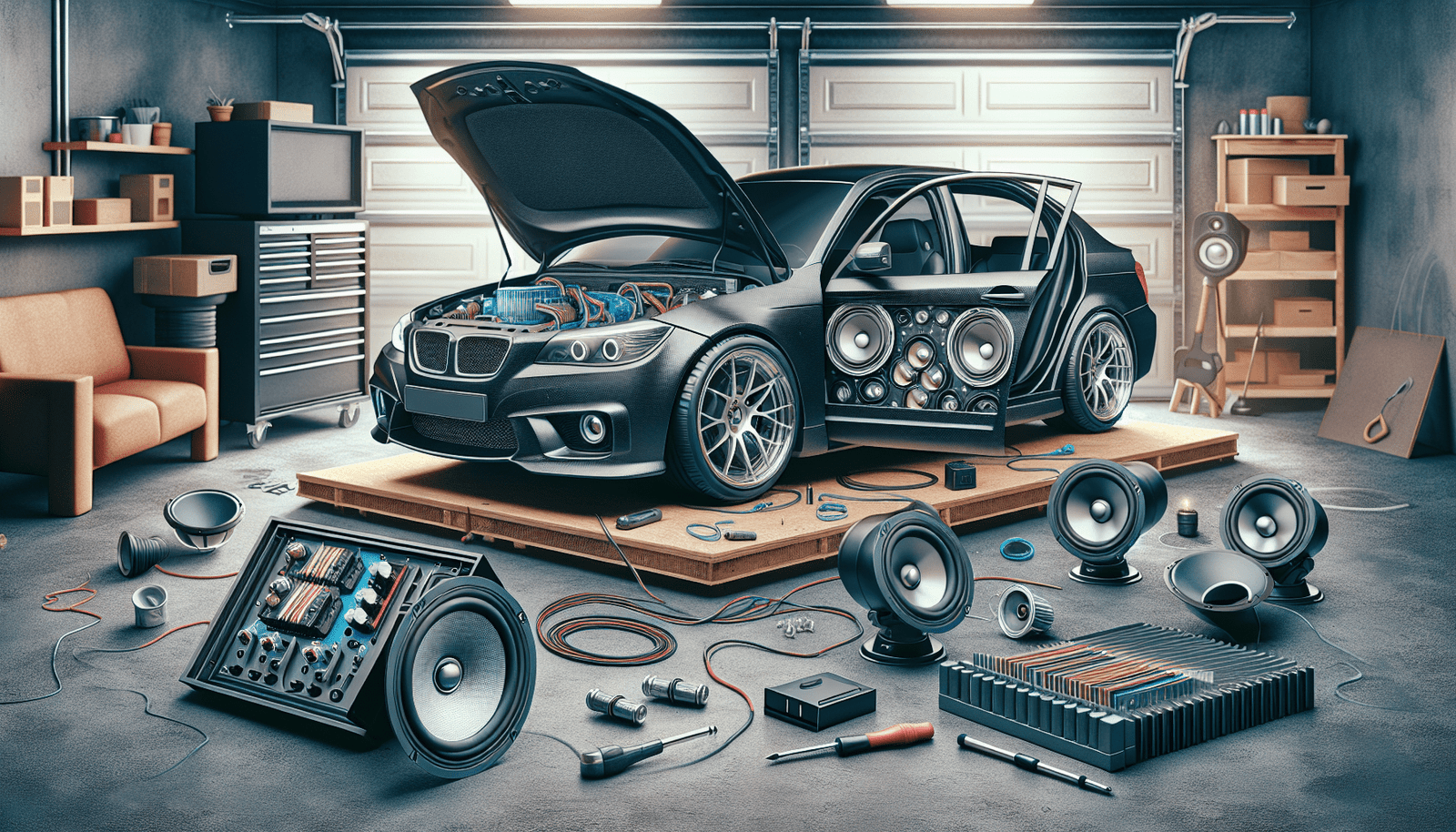
If you’re a music enthusiast who spends a significant amount of time in your car, then you know how important it is to have a high-quality audio system. From crisp highs to booming bass, a top-notch car audio system can completely transform your driving experience. In this ultimate guide, we will explore the best ways to improve your car’s audio system, from upgrading speakers and amplifiers to fine-tuning the audio settings. Get ready to take your music on the road to a whole new level of enjoyment.
Choose the Right Speakers
When it comes to improving your car’s audio system, one of the first steps you should take is choosing the right speakers. The speakers you choose will have a significant impact on the overall sound quality and listening experience in your car.
Consider Speaker Size and Configuration
The size and configuration of the speakers are essential factors to consider. Larger speakers generally produce more powerful and fuller sound, but they may not fit in your car’s existing speaker openings. Take note of the speaker sizes that are compatible with your car and choose accordingly.
Another aspect to consider is the speaker configuration. There are different types of speaker setups, including component speakers and coaxial speakers. Component speakers offer better sound quality because they separate the woofer and tweeter, allowing for more precise sound reproduction. On the other hand, coaxial speakers are a more convenient and cost-effective option since the woofer and tweeter are integrated into one unit.
Look for High-Quality Materials
The materials used in the construction of the speakers play a significant role in their sound output and durability. Look for speakers made with high-quality materials such as polypropylene, silk, or aluminum. These materials are known for their ability to produce clear and accurate sound while also being resistant to wear and tear.
Pay Attention to Sensitivity and Power Handling
Sensitivity and power handling are essential specifications to consider when choosing speakers. Sensitivity refers to how loud the speakers can get with a given amount of power. Higher sensitivity speakers require less power to produce the same volume, making them more efficient.
Power handling, on the other hand, refers to the amount of power the speakers can handle without distortion or damage. Make sure to choose speakers that can handle the power output of your car’s amplifier or head unit to ensure optimal performance and longevity.
Upgrade the Head Unit
Another crucial aspect of improving your car’s audio system is upgrading the head unit, also known as the car stereo or receiver. The head unit is the control center of your car’s audio system and plays a significant role in determining the sound quality and features available to you.
Check for Compatibility with Your Car
Before upgrading your head unit, check for compatibility with your car. Each car has its own unique wiring harness and connections, so it’s important to choose a head unit that is compatible with your car’s make and model. This will ensure a seamless installation process and avoid any compatibility issues.
Look for Advanced Features
When choosing a new head unit, look for models that offer advanced features that can enhance your listening experience. Some features to consider include built-in Bluetooth for wireless audio streaming and hands-free calling, USB ports for connecting and charging devices, and touchscreen displays for easier operation.
Consider Connectivity Options
Connectivity options are another key factor to consider when upgrading your head unit. Look for head units that offer multiple connectivity options such as auxiliary inputs, USB ports, and SD card slots. These options will allow you to connect various devices and expand your audio playback options.
Add an Amplifier
Adding an amplifier to your car’s audio system can significantly improve the overall sound quality and allow for higher volume levels. An amplifier provides more power to your speakers, resulting in clearer and more dynamic sound reproduction.
Determine Power Requirements
Before choosing an amplifier, it’s important to determine the power requirements of your speakers. Consider the RMS power rating of your speakers and choose an amplifier that can provide enough power to drive them effectively. This will ensure that your speakers can reach their full potential and prevent any damage caused by underpowering or overpowering.
Choose the Right Type of Amplifier
There are different types of amplifiers to choose from, including mono-channel, two-channel, and multi-channel amplifiers. Mono-channel amplifiers are designed for powering subwoofers and provide the low-frequency power needed for deep bass. Two-channel amplifiers are commonly used for powering a pair of speakers or a set of components. Multi-channel amplifiers offer the most versatility, allowing you to power multiple speakers and subwoofers.
Consider Multi-Channel Amplifiers for Full Sound
If you want to achieve a full sound experience with multiple speakers and subwoofers, consider investing in a multi-channel amplifier. This type of amplifier allows you to power your speakers and subwoofers separately, providing precise control over each audio component. With a multi-channel amplifier, you can achieve a balanced sound and make adjustments to suit your personal preferences.
Select the Perfect Subwoofer
If you’re a bass enthusiast or looking to add some depth and impact to your car’s audio system, a subwoofer is a must-have. A subwoofer is a specialized speaker designed to reproduce low-frequency sounds, adding richness and depth to your music.
Decide on the Size and Type of Subwoofer
Subwoofers come in various sizes and types, and choosing the right one depends on your personal preferences and available space in your car. The most common subwoofer sizes are 8 inches, 10 inches, and 12 inches. Larger subwoofers generally produce more powerful and deeper bass, but they also require more space for installation.
In terms of type, there are sealed, ported, and bandpass subwoofer enclosures. Sealed enclosures provide accurate and tight bass, while ported enclosures enhance the low-frequency output and give a more booming sound. Bandpass enclosures combine the best of both sealed and ported enclosures, delivering high output and deep bass.
Consider Enclosures for Optimal Performance
To achieve optimal performance from your subwoofer, consider investing in a subwoofer enclosure. An enclosure is a specially designed box that houses the subwoofer and helps enhance its performance. It isolates the sound waves produced by the subwoofer, preventing any interference and improving bass response.
When choosing an enclosure, make sure it matches the specifications of your subwoofer. Different subwoofers have different enclosure requirements, so it’s essential to select the right type and size for optimal performance.
Check the Subwoofer’s Power Handling
Just like speakers, it’s crucial to check the power handling specifications of the subwoofer. Pay attention to both the RMS power rating and the peak power rating. RMS power rating indicates how much continuous power the subwoofer can handle, while the peak power rating indicates the maximum power for short bursts. Choosing a subwoofer that can handle the power output of your amplifier will ensure that it operates efficiently and avoids any damage.
Focus on Sound Deadening
To truly enhance the audio experience in your car, it’s important to address the issue of road noise. Road noise can interfere with the clarity and overall sound quality in your car’s audio system. Fortunately, there are steps you can take to minimize and eliminate this issue.
Reduce Road Noise with Sound Deadening Materials
One effective way to reduce road noise is by using sound deadening materials. These materials are designed to absorb and dampen vibrations and reduce the transmission of sound through solid surfaces. By applying sound deadening materials to your car’s doors, floor, and trunk area, you can significantly reduce the amount of road noise that enters the cabin and affects your listening experience.
Install Acoustic Pads and Insulation
In addition to sound deadening materials, installing acoustic pads and insulation can further improve the sound quality in your car. Acoustic pads act as noise barriers, preventing sound from entering or exiting certain areas. Insulation helps absorb and block sound waves, reducing echo and improving overall audio performance.
When installing acoustic pads and insulation, focus on areas that are prone to vibrations and rattling, such as the doors and trunk. These areas commonly contribute to unwanted noise and can be improved with the use of acoustic pads and insulation.
Seal Any Gaps or Leaks in the Car’s Interior
To ensure maximum sound quality and minimize outside noise, it’s important to seal any gaps or leaks in your car’s interior. Check for any gaps or openings in your doors, windows, or the trunk and seal them using foam tape or rubber weatherstripping. Properly sealing these areas will create a tight and controlled listening environment, allowing you to fully enjoy your car’s audio system.
Optimize Speaker Placement
Speaker placement plays a crucial role in achieving balanced sound staging and imaging in your car’s audio system. Proper placement ensures that the sound is evenly distributed throughout the car and creates a realistic and immersive listening experience.
Position the Front Speakers for Imaging and Staging
The front speakers are responsible for creating a sense of detail and depth in your audio system. When placing the front speakers, consider positioning them at ear level for optimal sound staging. This means placing them at the same height as your ears, allowing the sound to reach your ears directly and creating a more natural and immersive sound.
Consider Tweeter Placement for High Frequencies
Tweeters are responsible for reproducing high-frequency sounds, and their placement can greatly impact the overall sound quality. Consider placing the tweeters in a location that allows them to direct sound towards the listeners’ ears. This can be achieved by mounting them on the dashboard or using separate tweeter pods that can be angled towards the listeners.
Adjust the Rear Speaker Position for Fill
While the front speakers are crucial for sound staging and imaging, the rear speakers are primarily used for fill and creating a more balanced sound. When positioning the rear speakers, aim to create a sense of ambiance and reinforcement without overpowering the front speakers. Consider mounting them higher than the front speakers to create a more enveloping soundstage.
Upgrade Wiring and Cables
Upgrading your car’s wiring and cables may not be the most glamorous part of improving your audio system, but it can have a significant impact on the overall sound quality. High-quality wiring and cables ensure that power and signals are transmitted efficiently, resulting in cleaner and more accurate sound reproduction.
Use High-Quality Speaker Wire
When connecting your speakers to the amplifier or head unit, it’s important to use high-quality speaker wire. Speaker wire with a thicker gauge ensures that the appropriate amount of power is delivered to the speakers, preventing any loss or degradation of sound quality. Additionally, high-quality speaker wire is less prone to interference, ensuring a cleaner audio signal.
Consider Upgrading RCA Cables
RCA cables are responsible for transmitting audio signals between the head unit and the amplifier. Upgrading your RCA cables to higher-quality ones can help minimize signal loss and interference, resulting in cleaner and more accurate sound reproduction. Look for RCA cables that are shielded to minimize noise and have gold-plated connectors for better connectivity.
Ensure Proper Grounding and Power Distribution
Proper grounding and power distribution are essential for ensuring that your car’s audio system functions correctly and operates at its best. Make sure that all components are properly grounded to prevent any unwanted noise or interference. Similarly, ensure that the power is distributed evenly among the various components, especially when using multiple amplifiers or subwoofers.
Tune Your Audio System
Once you’ve installed and upgraded your car’s audio system, tuning is the final step to achieving optimal sound quality. Tuning allows you to adjust the audio settings to your personal preference and compensate for any acoustic limitations in your car’s interior.
Use an Equalizer to Adjust Frequencies
An equalizer allows you to adjust the frequency response of your audio system, compensating for any unwanted peaks or dips in the sound. Experiment with the different frequency bands to fine-tune the sound according to your preferences. Be mindful of not boosting or cutting frequencies excessively, as this can lead to unnatural or distorted sound.
Balance Speaker Levels for a Natural Sound
Balancing speaker levels ensures that the sound is evenly distributed across all speakers, creating a cohesive and natural listening experience. Adjust the volume levels of each speaker, taking into consideration the different acoustic characteristics of your car’s interior. Aim to achieve a balanced soundstage without any noticeable imbalances or overpowering speakers.
Experiment with Sound Processing Features
Many modern head units and signal processors offer various sound processing features, such as time alignment, bass boost, and surround sound effects. Experiment with these features to find the sweet spot that enhances your listening experience. Remember to use these features sparingly and to maintain the integrity of the original audio recording.
Improve Source Quality
While upgrading your car’s audio components is crucial, it’s equally important to focus on the quality of the audio source itself. By investing in high-quality audio files and using the right playback devices, you can enhance the audio experience even further.
Invest in High-Quality Audio Files
The source material you use to play your music can greatly impact the overall sound quality. Consider investing in high-quality audio files instead of low-bitrate MP3s or streaming services that may sacrifice audio fidelity for convenience. Lossless audio formats such as FLAC or ALAC are great options if you want to experience music in its full detail and clarity.
Upgrade Your Car’s CD Player or Receiver
If you still rely on CDs for your audio playback, consider upgrading your car’s CD player or receiver to a higher-quality model. Newer models often offer better digital-to-analog converters and audio processing capabilities, resulting in improved sound quality. Look for CD players or receivers that support high-resolution audio playback for the best possible sound.
Consider Using a Digital Media Player
Digital media players, such as USB drives or portable music players, offer a convenient way to carry your high-quality audio files and play them in your car. Look for digital media players that support lossless audio formats and have built-in digital-to-analog converters for optimal sound quality. Some players even offer advanced features like gapless playback and digital audio outputs for further audio enhancement.
Consider Professional Installation
While many car audio upgrades can be done as DIY projects, it’s worth considering professional installation for a seamless and professional result. Professional installers have experience working with different car models and know the best techniques for optimizing sound quality and minimizing installation issues.
Research and Choose a Reputable Car Audio Installer
Before choosing a car audio installer, do your research and read reviews to ensure you’re selecting a reputable and trustworthy professional. Look for installers who have expertise in the specific audio upgrades you’re planning, whether it’s speaker installations, amplifier installations, or complete audio system overhauls.
Ensure Proper Wiring and Integration
One of the benefits of professional installation is that installers can ensure proper wiring and integration of all components. They can handle complex wiring tasks, ensure compatibility between different components, and minimize the risk of any issues occurring due to poor connections or faulty wiring.
Benefit from Expertise and Warranty Support
Professional installers not only have the necessary knowledge and skills to install your car audio upgrades correctly, but they also provide expert advice and guidance. They can help you choose the right components for your car, optimize the system for the best performance, and ensure that everything is functioning as intended. Additionally, many professional installations come with warranty support, giving you peace of mind and assistance in case any issues arise.
In conclusion, improving your car’s audio system is a multistep process that involves careful consideration of speakers, head units, amplifiers, subwoofers, sound deadening, wiring, tuning, source quality, and professional installation. By following these steps and paying attention to each aspect, you can enhance your car’s audio system and enjoy a truly immersive and high-quality sound experience on the road. Remember to choose the right components, optimize their placement, and fine-tune the system to your personal preferences. With the right upgrades and attention to detail, you can transform your car’s audio system into a true auditory masterpiece.