
In a world where technology continuously reshapes the landscapes of our lives, 3D printing emerges as a modern marvel, bridging the chasm between creativity and reality with mere layers of material. Imagine a printer that doesn’t just replicate words or images on a page but brings to life intricate models of the human heart, tailor-made prosthetics, and even living tissue. Welcome to the revolution—where the extraordinary capabilities of 3D printing are transforming the medical industry in ways onc confined to the realm of science fiction. This article takes you on a journey through hospital corridors and research labs,unveiling how this groundbreaking technology is healing wounds—literally and figuratively—and offering new hope where it once seemed distant. Join us as we explore stories of innovation that read like captivating tales, and meet the pioneers who turn thes tales into reality, one printed layer at a time.
How 3D Printing is Shaping Tomorrows Medical Advances
In recent years, the healthcare landscape has been revolutionized with the advent of 3D printing technology. This innovation is not only reshaping traditional manufacturing techniques but also enhancing the way medical professionals approach complex procedures. By allowing for the creation of customized prosthetics and implants tailored to the specific needs of patients, 3D printing is ensuring better compatibility and reduced recovery time. Imagine a world where doctors and surgeons collaborate with designers and engineers to craft bespoke biological structures that mimic the natural composition of individual patients. Today, this is a burgeoning reality, with benefits that extend beyond patient-specific implants to include surgical planning and education. Medical professionals can now rehearse surgeries using 3D printed models, considerably reducing the possibility of error during actual procedures.
- Personalized Medicine: customization of medical devices and medications.
- Cost Efficiency: Reduction in production costs for medical prosthetics.
- Quick Prototyping: Rapid development of new medical devices and tools.
The transformative power of 3D printing in medicine isn’t just about hardware; its also driving breakthroughs in bioprinting. This cutting-edge submission is aimed at creating bioengineered organs that overcome the shortage of organ donors. To date, researchers have made strides in printing skin, vascular networks, and even rudimentary organ structures. A closer look at its impact shows a promising future not only for those in need of transplants but also for pharmaceutical testing and development.
| Area of Impact | Benefit |
|---|---|
| anatomical Models | Improved simulation for training and diagnostics |
| Prosthetics | Customized fit and enhanced mobility |
| Bioprinting | Potential for organ creation |
Innovations and Opportunities: 3D printings Pathway to Personalized Medicine
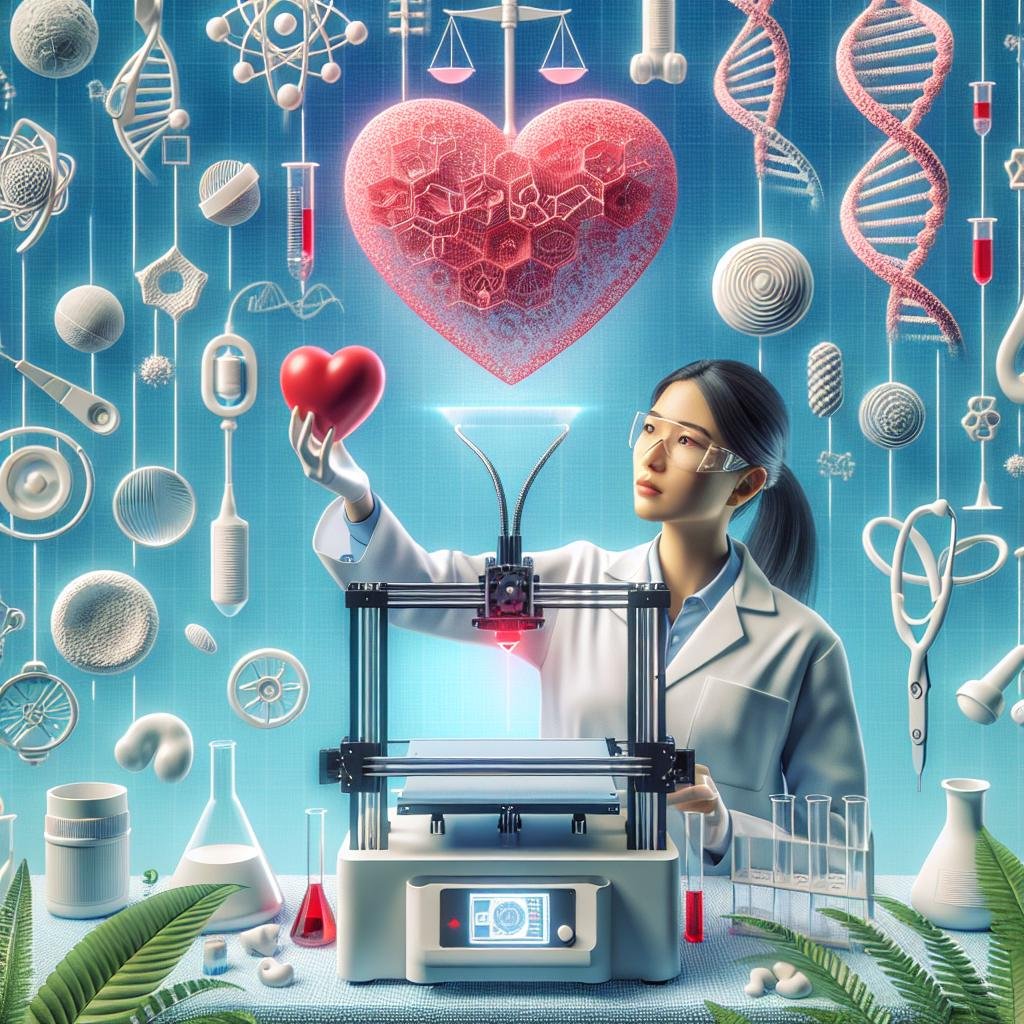
Revolutionizing the landscape of healthcare, 3D printing is carving a path for revolutionary advances in the field of personalized medicine. Imagine a world where custom medical devices and implants are generated to seamlessly fit each patient’s unique anatomical requirements. With this technology, the dream is becoming reality as medical professionals can now create patient-specific prosthetics, eliminating the trial-and-error process of fitting and refitting. Organs and tissues are also part of the 3D printing breakthrough; though complex, these innovations aren’t just science fiction anymore. Instead of waiting days,or even weeks,for a specialized piece of equipment,a digital blueprint allows creation in a matter of hours through onsite 3D printers.
The potential of 3D printing extends beyond the creation of physical objects. It provides opportunities for clinical prototyping of new medicines and experimental treatments, significantly reducing R&D timelines. Shortening this developmental phase potentially brings life-saving drugs to market much faster. Key areas of innovation include:
- Bioengineered Tissues: Emerging models for regenerating damaged skin, cartilage, and organs.
- Pharmaceutical Printing: Personalized dosages tailored to genetic and muscle compositions of each patient.
- Custom Orthotics: Enhanced comfort and performance for patients requiring support and mobility aids.
| Aspect | Traditional Medicine | 3D Printing Benefits |
|---|---|---|
| Speed | Weeks to months for custom solutions | hours to days for personalized products |
| Cost | High due to mass production and shipping | Reduced as materials are used only as needed |
| Precision | Limited by pre-designed options | Exceptionally accurate to individual anatomy |

Overcoming Challenges: Ensuring Safety and Precision in 3D Printed Medical Devices
In the realm of healthcare, the advent of 3D printing as a tool for creating medical devices is indeed transformative, yet it brings forth an array of challenges that the industry tirelessly works to overcome. Ensuring the safety and precision of these devices is paramount. The intricacy involved in crafting components that not only fit perfectly but also function flawlessly requires attention to a multitude of factors. From selecting biocompatible materials to adhering to stringent hygiene standards, each step in the lifecycle of a 3D printed medical device must be meticulously executed. Quality Assurance protocols must constantly evolve to encompass rigorous testing phases and validation procedures that are tailored to the unique nature of additively manufactured parts. As 3D printing continues to redefine the possibilities within healthcare, so too must the strategies that safeguard its implementation.
A noteworthy strategy involves leveraging the synergistic relationship between technology and regulatory frameworks. to navigate the complex landscape of regulatory compliance, industry leaders are collaborating with governing bodies to establish guidelines that not only focus on the potential of innovation but also on minimizing risks. Considerations include:
- Assessing the mechanical and thermal properties of materials
- Ensuring dimensional accuracy and surface finish
- Establishing post-processing techniques to eliminate contaminants
- Implementing continuous monitoring systems for real-time quality adjustments
Below is a quick comparison table of conventional vs. 3D printed medical devices:
| Feature | Conventional Devices | 3D Printed Devices |
|---|---|---|
| Customization | Limited | High |
| Production Time | Weeks to months | Days to weeks |
| Cost | Higher for custom parts | Potentially lower |
The continuous enhancement of these processes empowers healthcare professionals and patients alike, ensuring that the benefits of 3D printing are realized safely and efficiently.
Embracing the Future: Strategies for Integrating 3D Printing into healthcare
In today’s rapidly evolving medical landscape,the integration of 3D printing offers a myriad of opportunities that can reshape patient care and treatment protocols. It’s clear that one-size-fits-all solutions are becoming a thing of the past, making way for personalized healthcare services. 3D printing revolutionizes this aspect by crafting patient-specific prosthetics,implants,and surgical models. Hospitals and clinics can leverage this technology to produce intricate anatomical structures that ensure greater surgical precision.To seamlessly incorporate 3D printing, healthcare organizations can consider:
- Collaborating with tech companies to develop innovative medical devices and solutions.
- Establishing in-house 3D printing labs to accelerate the production cycle and improve patient outcomes.
<li>Investing in training programs for medical professionals to explore design and application techniques.
Moreover, as the potential of 3D printing in healthcare becomes more evident, regulatory bodies must adapt to facilitate its adoption. Clear guidelines and standards can help ensure patient safety and product quality. Here’s a glimpse of potential benefits and considerations when employing 3D printing in medical settings:
| Benefit | Consideration |
|---|---|
| Enhanced Customization | quality Control Assurances |
| cost-Effective Solutions | Initial Investment Costs |
| Reduced Lead Times | material Selection & Hygiene |
Q&A
Q&A: Exploring the transformative Impact of 3D Printing on the Medical Industry
Q1: What exactly is 3D printing, and how is it used in the medical industry?
A1: Great question! 3D printing, also known as additive manufacturing, is a process where materials are layered to create three-dimensional objects based on digital models. In the medical field, this technology is used to produce everything from prosthetic limbs to customized implants. It’s like having a magic wand where doctors can design and create precisely what a patient needs, right down to the perfect fit.
Q2: What are some exciting applications of 3D printing in medicine that are making headlines?
A2: Oh, there are so many jaw-dropping applications! For starters, anatomical models are crafted to help surgeons prepare for complex operations, reducing the risks involved. Additionally, 3D-printed organs and tissues are at the forefront, potentially ending donor shortages. And then there are customized prosthetics and orthotics, enabling personalized solutions that improve patient comfort and functionality. It’s truly revolutionizing healthcare one layer at a time!
Q3: How does 3D printing improve patient care and outcomes?
A3: By enabling customization, it ensures that medical devices and solutions are tailored to each individual’s unique anatomy. This personalization leads to faster healing, better fit and function, and overall improved patient satisfaction. Imagine walking into a doctor’s office and leaving with a custom-made, perfectly fitting brace built just for you – now that’s next level!
Q4: Is 3D printing cost-effective or just another expensive technology?
A4: Surprisingly, it’s both cost-effective and incredibly efficient! By reducing material waste and production time, 3D printing lowers costs for creating complex surgical tools and personalized devices. Plus, it eliminates the need for inventory stocking, as objects can be printed on demand. So, it’s friendly on the wallet while boosting innovation!
Q5: Are there any limitations or challenges currently facing 3D printing in healthcare?
A5: Of course, every magic has its bounds! A significant challenge is ensuring regulatory approval and maintaining stringent safety standards for 3D-printed medical devices.Additionally, bioprinting tissues and organs still faces hurdles like vascularization – getting those tiny blood vessels right is no small task! However, with ongoing research, these obstacles are continually being addressed.
Q6: What does the future hold for 3D printing in the medical world?
A6: The future is as bright as a freshly printed neon pink cast! We’re talking about routine personalized medicine becoming the norm, complete organs being printed for transplants, and even more advanced, biocompatible materials being developed. As technology progresses,the line between science fiction and reality continues to blur,opening doors to possibilities we once only dreamed of.
Q7: How can patients and healthcare providers stay informed about the latest in 3D printing advances?
A7: staying updated is a breeze with so many resources available! Patients can follow developments through reputable health blogs, science magazines, and newsletters from healthcare organizations. Healthcare providers should look to industry conferences, professional workshops, and journals dedicated to medical technology innovations. And of course, never underestimate the power of a good Google search!
We hope this Q&A has provided you with insightful glimpses into the world of 3D printing in the medical industry.Who knew that adding layer upon layer could lead to such transformative advancements?
Key Takeaways
As we wrap up our exploration into the transformative realm of 3D printing in the medical industry, it’s clear that we are on the precipice of a healthcare revolution. by merging the power of technology with human ingenuity, 3D printing is not just a tool but a bridge to unimaginable possibilities—from tailor-made prosthetics to complex organ structures. As we venture further into this brave new world, we’re reminded that innovation doesn’t just change practices; it changes lives.With each layer of biocompatible material laid and each customized medical solution crafted, 3D printing is redefining what it means to heal and be healed. Thank you for joining us on this amazing journey. May it inspire you to envision a future where the impossible is not just possible, but the new norm. Until next time, stay curious and keep dreaming big.